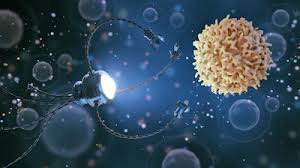
As opposed health and environmental impacts of nanoparticles to traditional fertilizer utilize, which includes numerous lots of inputs, nanotechnology concentrates on little amounts.
Nanoscale bits determine in between 1 as well as one hundred nanometers in a minimum of one measurement. afa88bet login
A nanometer is actually comparable towards one billionth of a meter; for point of view, a sheet of report has to do with one hundred,000 nanometers thick. afa88bet login
These bits have actually distinct bodily, chemical as well as architectural functions, which our team can easily fine-tune with design.
Numerous organic procedures, like the functions of tissues, occur at the nano range, as well as nanoparticles can easily affect these tasks.
Researchers are actually proactively investigating a variety of steel as well as steel oxide nanoparticles, likewise referred to as nanofertilizer, for utilize in vegetation scientific research as well as farming.
These products could be put on vegetations with dirt watering as well as/or even splashed into their leaves behind.
Research researches recommend that using nanoparticles towards vegetation leaves behind is actually particularly advantageous for the atmosphere since they don’t happened touching dirt.
Because the bits are actually incredibly little, vegetations take in all of them much a lot extra effectively compared to through dirt.
Our team synthesized the nanoparticles in our laboratory as well as splashed all of them with a personalized nozzle that provided an accurate as well as constant focus towards the vegetations.
Our team decided to aim at zinc, which is actually a micronutrient that vegetations have to expand, however in much smaller sized amounts compared to phosphorus.
Through using nano zinc towards mung bean leaves behind after 2 week of seed germination, our team had the ability to enhance the task of 3 essential enzymes within the vegetations: acid phosphatase, alkaline phosphatase as well as phytase.
These enzymes respond along with complicated phosphorus substances in dirt, transforming all of them right in to types that vegetations can easily use up quickly.
When our team created these enzymes much a lot extra energetic, the vegetations used up almost 11 per-cent much a lot extra phosphorus that was actually normally existing in the dirt, without getting any type of traditional phosphorous fertilization.
The vegetations that our team dealt with along with zinc nanoparticles enhanced their biomass (development) through 27 per-cent as well as created 6 per-cent much a lot extra beans compared to vegetations that our team expanded utilizing common ranch methods however no fertilizer.